How to Clean Commercial Carpet: The Complete Guide for Bismarck Businesses
Commercial carpet is one of the hardest-working surfaces in your building — and one of the most expensive to replace. The good news: with the right maintenance routine, commercial carpet in Bismarck offices, retail spaces, and rental properties can look sharp for years longer than neglected carpet. This guide covers exactly how to clean commercial carpet, from daily upkeep to deep cleaning schedules, plus the Bismarck-specific challenges (winter salt, we’re looking at you) that most national guides ignore.
Daily and Weekly Maintenance: The 80% of Carpet Care
Most commercial carpet damage doesn’t come from one big disaster — it comes from thousands of small ones. Dry soil, tracked in daily, acts like sandpaper on carpet fibers. A consistent routine prevents the majority of wear:
- Vacuum high-traffic areas daily. Entrances, hallways, and break rooms should be vacuumed every business day with a commercial-grade vacuum. Lower-traffic offices can go to 2–3 times per week.
- Use walk-off mats — and maintain them. Place mats at every entrance, inside and out. Vacuum mats daily and deep-clean or replace them regularly; a saturated mat just redistributes soil.
- Empty vacuums and change filters on schedule. A full bag or clogged filter cuts suction dramatically, which means you’re pushing dirt around instead of removing it.
- Groom the carpet periodically. A carpet rake or grooming brush lifts matted fibers in traffic lanes and keeps the pile looking even.
If your team only does one thing, make it daily vacuuming of traffic lanes. It removes up to 80% of dry soil before it grinds into the fibers.
How to Handle Spots and Spills in Commercial Carpet
In a commercial setting, spills happen constantly — coffee in the break room, tracked-in slush by the door, toner near the copier. Speed matters more than chemistry:
- Blot, never rub. Rubbing spreads the stain and damages fibers. Blot from the outside edge toward the center.
- Remove solids first. Scrape up solids with a dull edge before applying any liquid.
- Use the right spotter for the stain. Keep a basic commercial spotting kit on hand: a general spotter, a protein spotter (food, blood), and a tannin spotter (coffee, tea). Always test in an inconspicuous area first.
- Rinse and blot dry. Residue left in the carpet attracts new soil, so rinse the spot with clean water and blot thoroughly.
- Log recurring spots. If the same area keeps staining, it may need professional treatment — recurring spots often signal wicking from the carpet backing or pad.
What not to do: don’t pour bleach, don’t use over-the-counter “oxy” powders without rinsing (the residue accelerates re-soiling), and don’t ignore a spill hoping it’ll dry invisible. It won’t.
Deep Cleaning Methods for Commercial Carpet Compared
Routine maintenance handles surface soil, but embedded dirt, oils, and allergens require periodic deep cleaning. The three main commercial methods:
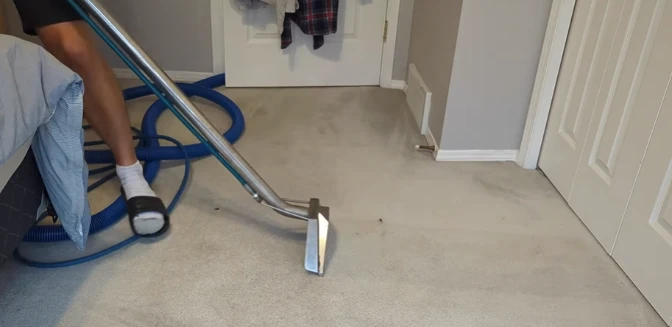
Hot water extraction (steam cleaning). The gold standard. Hot water and cleaning solution are injected into the carpet and immediately extracted along with dissolved soil. Best for restorative deep cleans and heavily soiled carpet. Drying time: typically 4–8 hours.
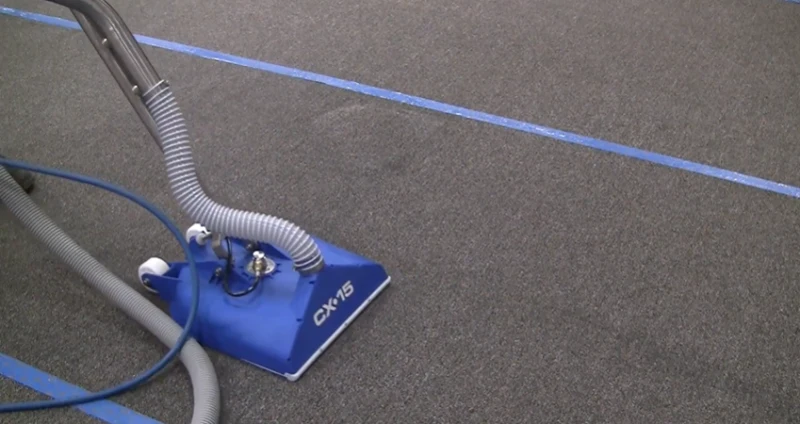
Encapsulation. A crystallizing detergent is worked into the carpet with a rotary machine; as it dries, it encapsulates soil into crystals that are vacuumed away. Lower moisture, faster drying (1–2 hours), and great for interim maintenance between extractions. Less effective on heavily soiled or greasy carpet.
Bonnet cleaning. An absorbent pad on a rotary machine scrubs the carpet surface. Fast and cheap, but it primarily cleans the top third of the fibers and can distort pile over time. Best reserved for surface-level touch-ups, not as a primary method.
For most Bismarck businesses, the winning combination is encapsulation for interim maintenance and hot water extraction for periodic restorative cleaning. If you’re weighing options for your building, our commercial carpet cleaning service covers both methods.
How Often Should Commercial Carpet Be Deep Cleaned?
There’s no single answer — it depends on traffic, soil load, and appearance standards. A practical schedule:
- Heavy traffic (entrances, lobbies, restaurants, medical waiting rooms): every 3–6 months
- Medium traffic (general offices, hallways, retail floors): every 6–12 months
- Light traffic (private offices, conference rooms): every 12–18 months
Two rules of thumb: if traffic lanes are visibly darker than the edges, you’re overdue. And carpet manufacturers’ warranties typically require professional cleaning every 12–24 months — check yours, because neglected maintenance can void coverage.
Bismarck-Specific Carpet Challenges
National guides miss what every Bismarck facility manager knows: our winters are brutal on carpet.
- Road salt and de-icer. Tracked-in salt leaves white residue that attracts moisture and breaks down fibers. Increase entrance matting from November through March, and schedule a post-winter deep extraction every spring.
- Sand and grit. Winter traction sand is abrasive. Daily vacuuming matters even more in winter months.
- Snowmelt moisture. Wet carpet breeds mold and mildew fast. Extract moisture promptly and ensure good airflow; never let carpet stay damp overnight.
- Summer dust. Dry summer months bring fine dust that settles deep into pile. Keep up the vacuuming schedule year-round.
A spring restorative cleaning after winter is the single highest-ROI carpet service for Bismarck businesses — it removes a full season of salt, sand, and moisture damage before it becomes permanent.
When to Call a Professional
In-house maintenance goes a long way, but call a professional when:
- Traffic lanes stay dark after vacuuming (embedded soil needs extraction)
- Stains keep reappearing after spot treatment (wicking from the pad)
- There’s a persistent odor (bacteria deep in fibers or backing)
- It’s been over 12 months since the last deep clean
- You’re dealing with water damage, flooding, or contamination — don’t wait on these
Professional equipment extracts soil that consumer and rental machines simply can’t reach, and the cost of a deep clean is a fraction of early carpet replacement.
Frequently Asked Questions
Can I use a rental carpet cleaner for my office?
Rental machines work for light residential touch-ups, but they lack the heat, pressure, and vacuum power for commercial carpet. They also tend to leave excess moisture and detergent residue, which causes rapid re-soiling. For commercial square footage, professional equipment pays for itself.
How long does commercial carpet take to dry after professional cleaning?
Hot water extraction typically takes 4–8 hours; encapsulation 1–2 hours. Good airflow, HVAC running, and air movers speed things considerably. Most offices schedule cleaning after hours so carpet is dry by morning.
Will professional cleaning damage my commercial carpet?
No — when done correctly, professional cleaning extends carpet life. Damage comes from neglect (grinding soil), over-wetting by underpowered machines, or harsh chemicals. A reputable cleaner using proper methods is the safest thing you can do for your carpet.
How much does commercial carpet cleaning cost in Bismarck, ND?
Pricing depends on square footage, soil level, and method. Most Bismarck cleaners quote per square foot for commercial work. Contact us for a free estimate — we’ll assess your space and give you a straight number.
Keeping your business’s carpet clean protects your image and your flooring investment. If your Bismarck, ND office, retail space, or commercial building is due for a deep clean, get a free estimate from Bismarck Carpet Care — same-day service available.